

When Should I Worry About Lower Abdominal Pain?
Lower abdominal pain can result from digestive, urinary, reproductive, or other health concerns, and the severity of discomfort does not always indicate how serious the underlying cause may be. Medical evaluation is especially important when pain is severe, persistent, or worsening, or when it occurs with symptoms such as fever, repeated vomiting, abdominal swelling, bloody stools, blood in the urine, dizziness, or significant tenderness. At UCare Urgent Care and Walk-In Clinic, our professional medical team can evaluate lower abdominal pain, review accompanying symptoms, and help determine whether additional testing, treatment, or a higher level of care may be appropriate. Contact us for more information or schedule an appointment. We are conveniently located at 13472 Eastlake Blvd, Horizon City, TX 79928.
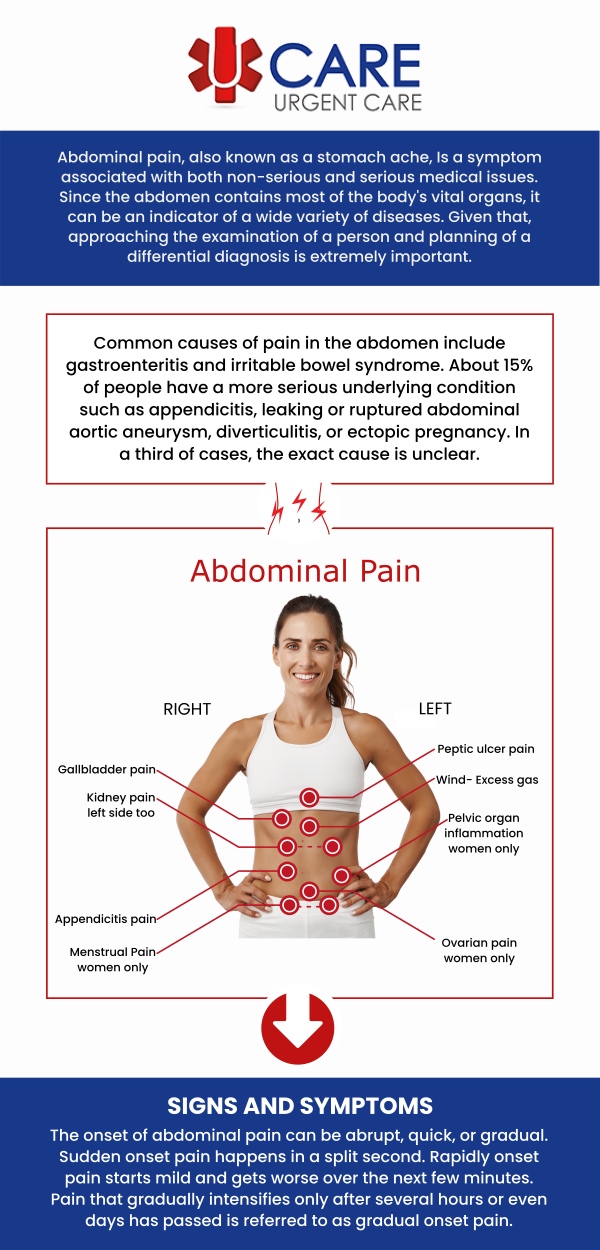
Table of Contents:
What are the most common, everyday causes of lower abdominal pain?
How can I differentiate between normal digestive discomfort and serious lower abdominal pain?
When should lower abdominal pain prompt a visit to the emergency room?
How long is “too long” for mild or moderate lower abdominal pain to last before I schedule a check-up?
How to Identify Urgent Lower Abdominal Pain – Guidance from UCare Urgent Care in Horizon, TX
Lower abdominal pain is common and can come from several digestive, urinary, muscular, or reproductive causes. Everyday digestive issues such as gas, bloating, constipation, food intolerance, diarrhea, or a temporary stomach illness may produce cramping or pressure in the lower abdomen. Irritable bowel syndrome can also cause recurring abdominal pain associated with changes in bowel movements.
Some common causes may include:
• Gas and bloating
• Constipation or diarrhea
• Food intolerance
• Irritable bowel syndrome
• Urinary tract infections
• Menstrual cramps
• Muscle strain
The location, duration, and accompanying symptoms can help determine the possible cause, and pain severity alone does not always indicate how serious a condition may be.
At UCare Urgent Care and Walk-In Clinic, our skilled team can evaluate lower abdominal pain that is persistent, recurring, or interfering with daily activities. We review symptoms and medical history to help identify potential causes and determine whether further evaluation or a higher level of medical care may be needed.
Mild digestive discomfort often occurs with recognizable symptoms such as gas, bloating, constipation, or diarrhea and may improve after passing gas, having a bowel movement, or as a temporary digestive problem resolves. Gas-related symptoms are particularly common during or after meals and may cause fullness, bloating, and abdominal discomfort.
Lower abdominal pain deserves closer attention when it:
• Becomes severe or progressively worse
• Persists or repeatedly returns
• Occurs with fever
• Is accompanied by persistent vomiting
• Occurs with blood in the stool
• Causes significant abdominal swelling or tenderness
• Is associated with unexplained weight loss
Importantly, mild pain does not always mean the underlying problem is minor, so changes in the pattern and associated symptoms should also be considered.
At UCare Urgent Care and Walk-In Clinic, our team can assess lower abdominal pain when you are unsure whether your symptoms are related to routine digestive discomfort or another health concern. We can evaluate the pattern and severity of your symptoms and help determine the most appropriate next step in care.
Emergency evaluation may be appropriate when lower abdominal pain is sudden, severe, rapidly worsening, or accompanied by symptoms suggesting a potentially serious condition. Severe abdominal pain with persistent vomiting, high fever, significant swelling, or extreme tenderness warrants prompt medical attention rather than waiting to see whether symptoms resolve on their own.
Seek immediate medical attention for warning signs such as:
• Sudden, sharp, or severe abdominal pain
• Vomiting blood or passing bloody or black stool
• A stiff, hard, or very tender abdomen
• Inability to pass stool or gas, especially with vomiting
• Severe dizziness, fainting, or weakness
• Persistent vomiting
• Severe abdominal swelling
• Chest pain occurring with abdominal pain
These symptoms may require emergency testing and treatment that cannot safely be delayed.
At UCare Urgent Care and Walk-In Clinic, our team can evaluate many non-life-threatening causes of lower abdominal pain. However, when symptoms suggest a medical emergency, we encourage patients to seek emergency care promptly so they can access the advanced evaluation and treatment they may need.
There is no single timeframe that applies to every case because the cause and pattern of lower abdominal pain matter. Mild cramping from gas or temporary digestive upset may improve fairly quickly, but pain that continues, becomes more frequent, or changes in character should not be ignored. MedlinePlus advises contacting a healthcare professional when abdominal pain does not improve within about 24 to 48 hours or becomes more severe or frequent.
A medical check-up should be considered sooner if the discomfort:
• Continues beyond 24 to 48 hours without improvement
• Keeps returning
• Gradually becomes more painful
• Interferes with eating, sleeping, or normal activities
• Occurs with nausea, vomiting, fever, urinary symptoms, or bowel changes
Mayo Clinic also recommends scheduling an evaluation when abdominal pain is concerning or lasts more than a few days.
At UCare Urgent Care and Walk-In Clinic, our team can assess mild or moderate lower abdominal pain that is not improving as expected. Early evaluation can help identify possible digestive, urinary, or other causes and determine whether additional medical care is appropriate based on your individual symptoms.
At UCare Urgent Care and Walk-In Clinic, our professional team helps patients in Horizon, TX recognize when lower abdominal pain may need prompt medical attention. Pain that becomes increasingly severe, continues for more than 24 hours, or occurs with fever, persistent nausea or vomiting, blood in the stool or urine, or noticeable abdominal swelling should be medically evaluated. We assess the location and pattern of the discomfort, accompanying symptoms, and medical history to help determine the appropriate next step in care.
Our team also helps patients understand when symptoms may require emergency care rather than an urgent care visit. Sudden or severe abdominal pain, a hard or very tender abdomen, vomiting blood, black or bloody stools, inability to pass stool or gas with vomiting, severe dizziness, or chest pain can signal a more serious problem requiring immediate evaluation. At UCare Urgent Care and Walk-In Clinic, we provide accessible evaluation for non-life-threatening lower abdominal pain and guide Horizon, TX patients to a higher level of care when necessary.
Contact us for more information or schedule an appointment. We are conveniently located at 13472 Eastlake Blvd, Horizon City, TX 79928. We serve patients from Horizon City TX, El Paso TX, Lee Travino Drive TX, Fort Bliss TX, Mission Valley TX, Resler Canyon TX, Alfalfa TX, Montwood TX, and BEYOND!

Check Out Our 5 Star Reviews


Additional Services You May Need


 Send Text
 How May I Help You?